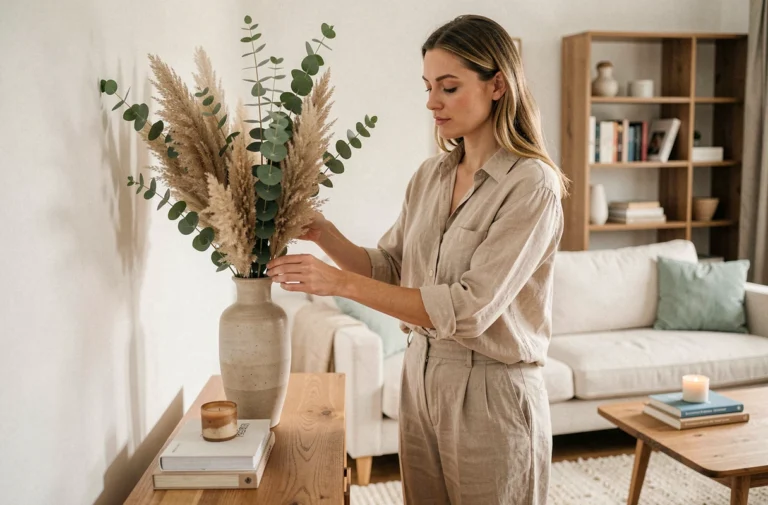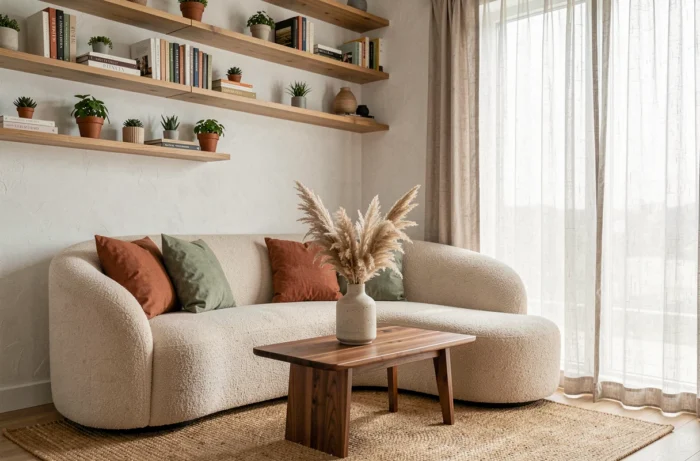
A warm and stylish interior relies on three concrete levers: the color palette, the choice of materials, and the arrangement of furniture. Since 2024, the dominant trend in decoration has shifted away from cold minimalism (white, gray, clean lines) to favor textured, lively spaces where each piece of furniture tells a story. Here are ten actionable ideas to transform your interior without a complete overhaul.
1. Embrace new warm neutrals as the base of your palette
Off-white and light gray have long dominated contemporary interiors. They are now giving way to khaki, evolved greige, and rosy beige, tones that warm a room without darkening it.
Applying a new warm neutral on the living room walls immediately transforms the atmosphere. Khaki, for example, pairs well with both light wood furniture and deep velvet seating. Unlike classic beige, these shades possess a chromatic complexity that avoids monotony.
To explore other transformation ideas by room, the home inspirations on Les Embellies Déco detail color-material combinations room by room.
2. Bet on terracotta and mustard yellow as structural accents
Terracotta and mustard yellow are not just decorative accents. In 2025-2026, they function as structural colors that visually anchor a space. A terracotta accent wall in a dining room or mustard yellow cushions on a gray sofa are enough to warm the entire room.
The common mistake: multiplying these strong shades in the same space. A single colored focal point per room maintains the balance between warmth and design.
3. Integrate sculptural solid wood furniture
The start of 2026 confirms the return of matte dark wood, sharply contrasting with the ubiquitous bleached oak of recent years. An organic-shaped walnut coffee table or a curved mango wood console becomes a visual anchor.
Sculptural furniture structures the space without unnecessary decorative additions. It replaces the accumulation of objects with a strong piece that draws the eye. Favor sustainable woods and matte finishes, which age better than glossy surfaces.
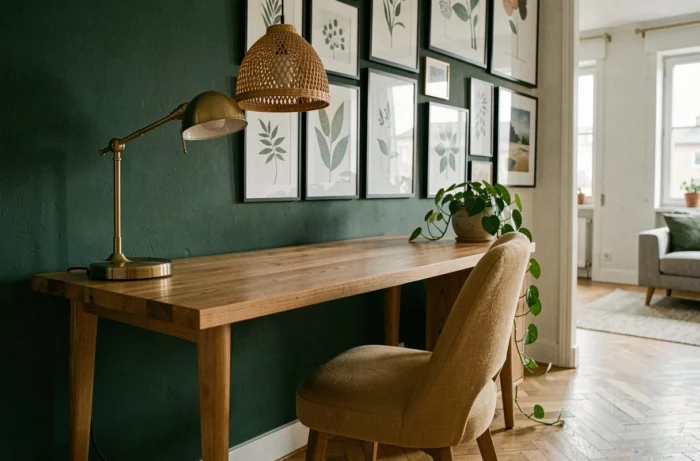
4. Layer textures instead of colors
A warm interior is not built solely through color. Layering textures (crumpled linen, boucle wool, corduroy velvet, raw ceramic) creates a sensory depth that color alone cannot achieve.
Specifically, on a neutral fabric sofa, place a thick wool throw and washed linen cushions. On the floor, a jute rug under a raw wood table adds an extra layer. The operational rule: at least three different textures per living area.
5. Switch to modular layered lighting
A single ceiling light in the center of the room produces flat, cold light. Warm lighting works in layers: ambient light (pendant or string lights), functional light (reading lamp, adjustable spotlight), and accent light (candle, low table lamp).
- Target color temperature: warm white bulbs, around 2,700 K, naturally warm the ambiance of the living room or bedroom.
- Dimmers: a simple dimmer on a pendant transforms the same room from dinner to relaxation.
- Floor lamps: they create pockets of low light that visually enlarge the space while making it more intimate.
6. Adopt the collected over time style for the living room
The “collected over time” style is the structuring trend of 2026 in interior decoration. The principle: compose a space with pieces gradually accumulated rather than buying a coordinated set all at once.
A vintage armchair coexists with a contemporary coffee table and a handmade light fixture. The result appears natural, lived-in, in contrast to “catalog” interiors. This style requires a common thread (a color palette or a family of materials) to avoid a hodgepodge effect.
7. Replace the classic coffee table with an oversized side table
A standard rectangular coffee table often disrupts flow in a living room. An increasingly popular alternative: the oversized round side table, made of stone, turned wood, or patinated metal.
This format frees up visual space on the floor, allows for more flexible sofa configurations, and adds a sculptural character to the room. For a dining room, the same principle applies with a solid wood round table that encourages conviviality.
8. Create a reading nook with a cocooning armchair
A dedicated reading or resting corner transforms an unused nook into a functional and warm space. The cocooning armchair (high back, deep seat, wide armrests) is the centerpiece of this micro-space.
Place it near a source of natural light, add an adjustable reading lamp, and a small side table for your cup. This nook doesn’t need more than two square meters to work.
9. Dress the walls with raw materials instead of paint
Textured wallpaper, slatted wood panels, or lime plaster offer an alternative to flat paint. These coverings add depth and absorb light differently depending on the time of day.
- Lime plaster creates a slightly irregular matte effect, perfect for an accent wall in a living room or bedroom.
- Vertical wood slats (slatted) structure a wall while warming the atmosphere.
- Subtle geometric patterned wallpaper adds rhythm without overwhelming the room.
10. Integrate large plants as design elements
Small plants placed on a shelf often go unnoticed. A large plant (fiddle leaf fig, strelitzia, large monstera) placed in a terracotta or natural fiber pot becomes a true decorative element in its own right.
It brings life, softens the lines of geometric furniture, and contributes to the sense of well-being in the room. The constraint to anticipate: brightness. Choose the species based on the actual exposure of your living room, not just aesthetics.
Transforming an interior into a warm and stylish space doesn’t require a complete redesign. A rethought color palette, two or three layered textures, and a strong piece of furniture are enough to radically change the atmosphere of a room. The rest builds over time, object by object.