
Long-term rental (LLD) in Belgium refers to a contract whereby a lessor provides a vehicle to an individual or a company for a period generally ranging from 12 to 72 months. The tenant pays a fixed monthly rent and returns the vehicle at the end of the contract, without any obligation to purchase. This mechanism differs from financial leasing, where the purchase option at the end of the contract is the central principle.
Tax Deductibility and 2026 Timeline: The Parameter That Freezes the Contract
In Belgium, the date of signing a long-term rental contract determines the tax regime applicable throughout the duration of this contract. For electric vehicles taken on LLD before December 31, 2026, professional expenses remain 100% deductible, even if the contract extends well beyond this deadline.
From 2027 onwards, each new year of initial contracting reduces this ceiling: 95% in 2027, 90% in 2028, 82.5% in 2029, 75% in 2030, and then 67.5% for contracts signed from 2031 onwards. This gradual reduction only applies to new contracts, not those already in progress.
For thermal cars, the break is more pronounced. Vehicles with gasoline, diesel, or hybrid engines taken on leasing or LLD from January 1, 2026, will no longer benefit from any tax deductibility as a company car. With several Belgian lessors offering varied deals, it may be useful to compare the available options on the Longdrivers Belgium website before committing to a contract that will last several years.
This mechanism creates a calendar threshold effect. Signing an electric LLD contract in December 2026 rather than January 2027 represents a five-point deductibility difference over the life of the contract, which directly impacts the TCO (total cost of ownership) of the vehicle.

LLD, operational leasing, and financial leasing: contractual distinctions in Belgium
These three terms are often confused, including in Belgian commercial brochures. Long-term rental and operational leasing essentially cover the same mechanism: a monthly rent that includes the use of the vehicle, maintenance, insurance, and assistance. The tenant never becomes the owner.
Financial leasing works like disguised credit. The lessee pays monthly installments that amortize the value of the vehicle and has, at the end of the contract, a purchase option at a pre-agreed residual price. This arrangement is more commonly used by freelancers and SMEs who wish to register the vehicle on their balance sheet.
On the VAT side, LLD rents are considered as service provisions. VAT applies to each monthly payment and not to the total price of the vehicle. For professional use, the deductible portion of VAT depends on the actual percentage of professional use, a point that the Belgian administration regularly checks.
Criteria for choosing between LLD and financial leasing
- The intention to keep the vehicle after the contract leans towards financial leasing, which provides a purchase option at an agreed residual value.
- The need for budget predictability, without surprises related to maintenance or depreciation, favors LLD where everything is included in the monthly rent.
- Accounting treatment differs: in LLD, the vehicle does not appear on the tenant’s balance sheet, which can lighten the debt ratio for companies.
Components of the monthly rent in long-term rental
An LLD rent is not a simple fraction of the catalog price. Several parameters directly influence the monthly amount, and understanding them avoids unpleasant surprises at return time.
The duration of the contract and the annual contractual mileage form the basis of the calculation. The longer the duration, the lower the monthly rent, but the more the vehicle depreciates. Mileage works like a package: exceeding the agreed threshold incurs additional charges per excess kilometer, often at a rate significantly higher than the basic cost per kilometer.
The included services vary from one lessor to another. A contract may include:
- Comprehensive insurance and liability coverage, with a deductible amount that varies according to the plans.
- Routine maintenance (oil changes, brake pads, tires) and mechanical repairs outside of accidents.
- Roadside assistance and a replacement vehicle in case of prolonged immobilization.
- Complete administrative management: registration tax, annual circulation tax, technical inspection.
The estimated residual value of the vehicle at the end of the contract also affects the rent. A model that retains a high value in the used market generates a lower rent than a vehicle that depreciates quickly. SUVs and sedans from brands like Peugeot or Citroën show different depreciation behaviors, which explains significant rent differences at equivalent catalog prices.
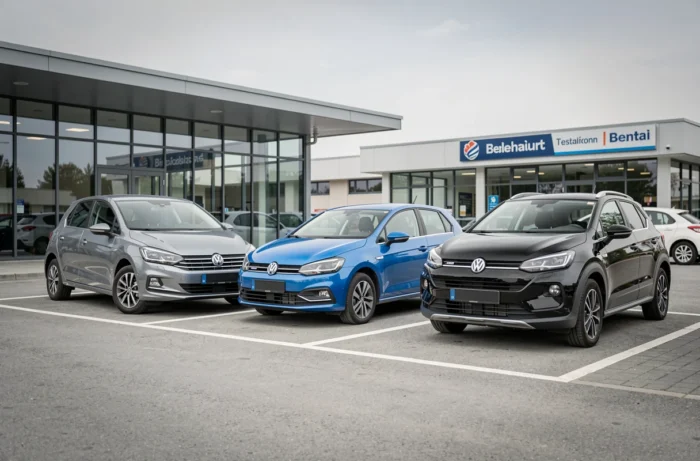
Returning the vehicle: costs that the contract does not always make visible
The return is the moment when LLD can become costly if it has not been anticipated. The lessor inspects the vehicle and charges for damages that exceed normal wear and tear. The definition of normal wear and tear varies according to leasing companies, and some contracts refer to an internal reference rarely communicated at signing.
Superficial scratches, impacts on the windshield, and damaged rims are the most common billing items. Excess mileage is added when the package was underestimated at the outset. Adjusting the contractual mileage during the contract is sometimes possible through an amendment, but the cost of this modification depends on when it occurs.
For Belgian companies managing a fleet, the simultaneous return of several vehicles can generate significant cumulative invoices. Documenting the condition of the vehicle with dated photos a few weeks before the return serves as a concrete negotiation lever against the lessor’s expert report.
The Belgian LLD market is evolving rapidly due to the transition to electric vehicles and the tax deadlines of 2026-2027. Each month of delay in signing a contract changes the applicable tax framework, making the timing of the choice as crucial as the choice of the vehicle itself.