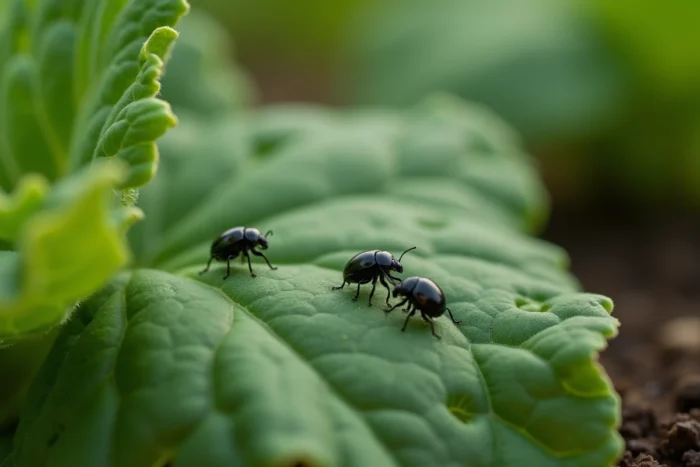
Flea beetles can perforate the leaves of radishes, arugula, or cabbage within hours. In the face of these millimeter-sized beetles, gardeners often accumulate foliar treatments without ever targeting the larval stage, which occurs underground. Comparing control methods based on their target (adult or larva) and their duration of action allows us to measure which ones truly protect a vegetable garden throughout the season.
Control Methods for Flea Beetles in the Vegetable Garden: Comparison by Target and Effectiveness
Not all approaches target the same stage of the flea beetle cycle. Some act on the adults present on the foliage, while others target the larvae buried in the soil. Cross-referencing these two parameters helps to build a coherent strategy.
| Method | Target | Duration of Action | Main Limitation |
|---|---|---|---|
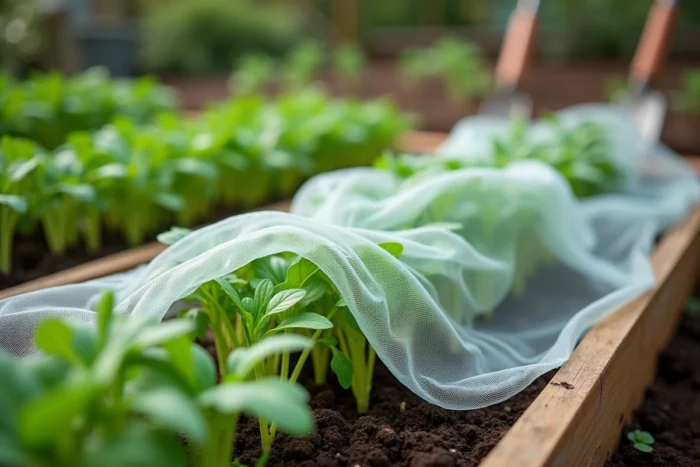
| Insect netting | Adults (physical barrier) | All season if maintained | Restricts air circulation, promotes excessive humidity |
| Nettle extract spray | Adults (foliar repellent) | Several days, frequent renewal | No effect on larvae in the soil |
| Entomopathogenic nematodes (Heterorhabditis bacteriophora) | Larvae in the soil | Several weeks after application | Requires moist soil and a minimum temperature |
| Thick mulch | Adults + larvae (prevents laying) | Several months | Does not stop an already established infestation |
| Trap plants (mustard, watercress) | Adults (diversion) | During the crop cycle of the trap plant | Can attract more flea beetles if poorly managed |
The table highlights a common imbalance: the majority of common practices target adults on the foliage. The larvae, which feed on the roots and whose emergence fuels the population of adults, are often overlooked. To consult the solutions from Conseil Jardin, this complementarity between aerial control and underground control is the guiding principle of sustainable protection.

Entomopathogenic Nematodes Against Flea Beetle Larvae: An Underutilized Approach
Typical content on flea beetles details foliar damage (characteristic small round holes), extracts, and nets. Very few address targeted control against larvae using entomopathogenic nematodes.
The principle relies on microscopic worms, particularly the species Heterorhabditis bacteriophora, which parasitize flea beetle larvae in the soil. Applied by watering at the base of the plants, these nematodes penetrate the larvae and release a symbiotic bacterium that destroys them within a few days.
Application Conditions in the Vegetable Garden
Effectiveness depends on two simple physical parameters: soil temperature and moisture. Soil that is too dry or too cold renders the nematodes inactive. Application is generally done at the end of the day when the soil has accumulated heat without being dried out by direct sunlight.
Timing is as important as the method. Applying nematodes when larvae are present in the soil (after adult laying, during the season) reduces pressure on the next generation of flea beetles. Targeting the larvae decreases the number of emerging adults later in the season, something that neither the net nor the extract can achieve alone.
Insecticide Resistance in Flea Beetles: Why Chemical Treatments Are Losing Ground
Large flea beetles, particularly observed on rapeseed crops in France, have developed a documented resistance to synthetic insecticides. Agricultural technical institutes now recommend specific molecules like phosmet, or combinations of chlorpyrifos-ethyl and pyrethroids, while limiting their use to avoid exacerbating the phenomenon.
For the amateur gardener, this information changes the game. The broad-spectrum insecticides sold in garden centers often rely on pyrethroids. If local flea beetle populations have developed a tolerance to these molecules, the treatment merely selects resistant individuals without reducing overall pressure.
Consequences for a Chemical-Free Vegetable Garden
This growing resistance reinforces the relevance of physical barriers, crop rotations, and arrangements that favor beneficial organisms. In practice, this means:
- Alternating the locations of crucifers and solanaceous plants from year to year to avoid concentrating larvae in the same soil area
- Installing flowering strips at the edge of the vegetable garden, as grasses and wildflowers host natural predators (ground beetles, rove beetles) that consume adult and larval flea beetles
- Combining insect netting at the beginning of the season with an application of nematodes a few weeks after transplanting, to cover both stages of the pest
Rotation alone is not sufficient if the vegetable garden is small: adult flea beetles fly short distances and easily recolonize a neighboring plot. In contrast, a living soil, rich in organic matter and underground predators, exerts constant pressure on the larvae without human intervention.
Flowering Strips and Ecological Infrastructure: Acting at the Garden Scale
Classic approaches are limited to the vegetable plot. However, the design of borders directly influences the flea beetle population. Strips of grasses, clover, or phacelia installed around the growing beds create a permanent habitat for predatory beneficials.
Ground beetles, active at night, traverse these refuge areas towards the crops and consume a significant number of larvae and adults. The greater the plant diversity around the vegetable garden, the higher the natural pressure on pests.
Combining Intervention Scales
An effectively protected vegetable garden against flea beetles does not rely on a single method. The most coherent combination involves three levels:
- The soil: entomopathogenic nematodes at the right time, thick organic mulch to slow laying and maintain moisture
- The foliage: insect netting on young crucifer plants during the first weeks, a period of maximum vulnerability
- The landscape: flowering strips, low hedges, and uncultivated areas around the vegetable garden to maintain populations of beneficials
Young plants remain the primary target of flea beetles. A well-developed cabbage or radish plant tolerates foliar perforations better than a two-leaf seedling. Transplanting robust plants rather than sowing directly in place reduces the vulnerability window, without eliminating the pest.
Ultimately, controlling flea beetles in the vegetable garden takes place both below the soil surface and on the leaves. Combining nematodes, physical barriers, and functional biodiversity covers the entire cycle of this beetle, where a single method always leaves a gap.