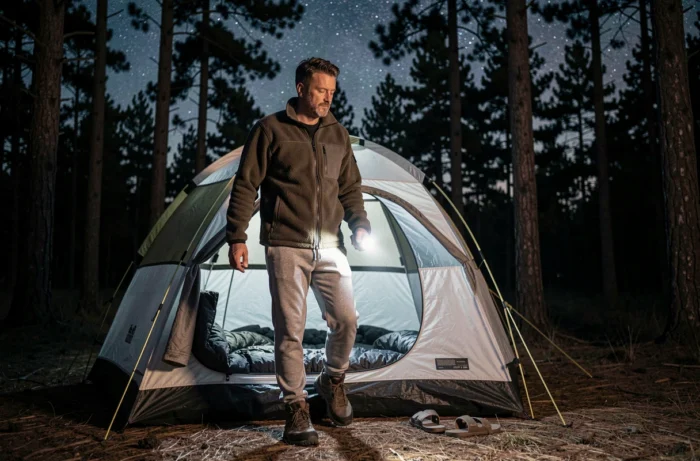
Getting out of a warm sleeping bag at three in the morning to cross a campsite in the dark, with sandals poorly put on and a flickering headlamp: we all know this scenario. The problem isn’t so much about needing to pee at night while camping, but doing it without waking your partner, your children, or the neighboring tents. A few simple adjustments, made before bedtime, can radically change the experience.
Prepare the campsite before bedtime to limit nighttime outings
The best nighttime outing is the one you avoid. You can reduce the number of wake-ups by adopting two habits before turning off the headlamp.
The first: urinate twice before going to bed. Once early in the evening, and a second time just before slipping into the sleeping bag. REI recommends this double emptying to maximize the time before the first nighttime wake-up.
The second: limit hydration in the hour leading up to bedtime. Drink normally during the day and at mealtimes, but avoid the large glass of water or herbal tea just before going to sleep. The bladder doesn’t need to be tested. By following the tips from Agence Voyage Tourisme, you can also anticipate the arrangement of your sleeping area to facilitate a quick exit.
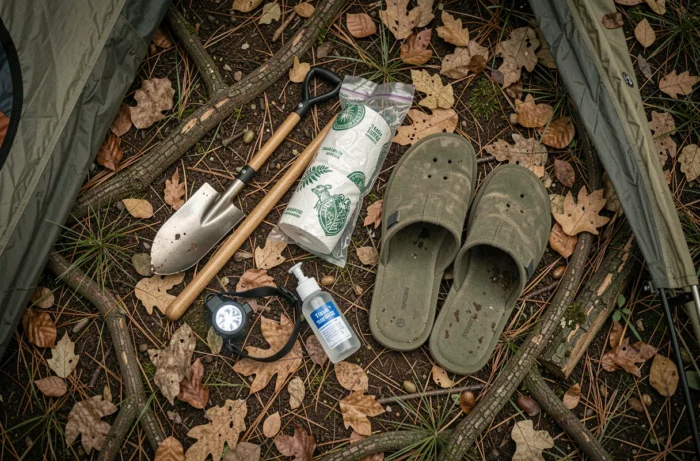
In terms of organization, prepare a small kit within reach: easy-to-slip-on sandals, a headlamp set to red light (less harsh on the eyes and teammates), and if needed, a dedicated bottle or a portable urinal. Everything should be accessible without rummaging in the dark.
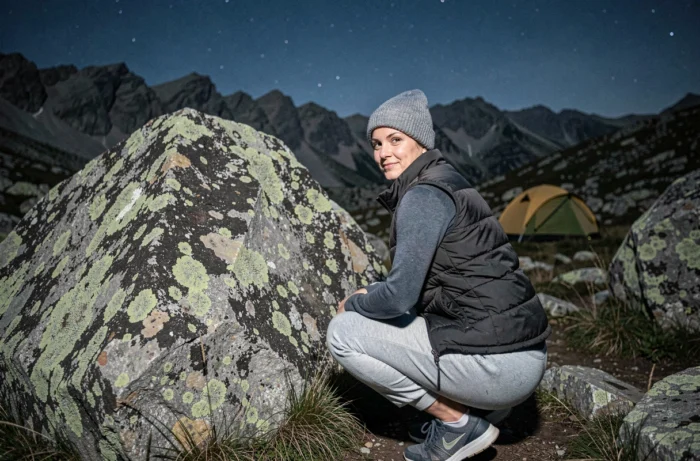
Nocturnal pee in a shared tent: don’t wake anyone
When sleeping with others under the same canvas, every zipper becomes an alarm signal. The zip of a tent at night almost certainly wakes a child or a light-sleeping partner.
Minimize noise to the strict minimum
The simplest trick: slowly open the zipper in short bursts. A zipper pulled all at once produces a continuous, high-pitched sound. Broken into segments of a few centimeters with pauses, the noise becomes much less perceptible to a sleeper.
You can also leave the tent slightly open if conditions allow (no rain, inner mosquito net closed). This completely eliminates the zipper problem upon return.
The dedicated bottle to stay inside the tent
For those sleeping in a shared tent in cold or rainy weather, a urinal bottle remains the most discreet option. Use a wide-mouthed, preferably opaque bottle, kept in a designated corner of the vestibule or next to the mattress.
REI emphasizes a often overlooked point: practice using the bottle at home before the trip. It’s not a natural action, especially lying down or in a confined space. For women, a portable urination funnel (sometimes called a “stand-to-pee”) greatly facilitates the maneuver.
- Choose a bottle of at least one liter, with a wide mouth, and a cap that seals tightly
- Stick a piece of colored tape on the cap to distinguish it from the water bottle, even in the dark
- Close immediately after use and place it outside the tent (vestibule or just in front of the fly) to empty it in the morning
Feedback varies on the comfort of this method, but in a tent where young children are sleeping, it avoids a chain reaction of wake-ups that can last much longer than the outing itself.
Camping as a couple or family: managing nighttime intimacy
Nocturnal peeing while camping becomes a delicate subject when it touches on intimacy. As a couple, leaving the tent in the middle of the night exposes you to the chill and the potential gaze of neighboring campers. With children, there’s the added risk of them waking up and panicking upon finding a parent missing.
A simple protocol for families
With children, it’s beneficial to establish a clear routine from the first night. Show them the way to the restrooms (or the chosen spot) with the headlamp, and identify obstacles together. If the child needs to go to the bathroom at night, they know to wake an adult with a tap on the shoulder, not by shouting.
For the little ones, a travel potty placed in the vestibule of the tent solves the issue. Place a plastic bag lined with a bit of sawdust or litter to absorb the liquid and limit odors. This is the principle of dry toilets in miniature form.
As a couple, going out together is not a luxury
When camping in the wild or in a secluded spot, going out together at night is reassuring and quicker. One person shines the light, while the other relieves themselves. This limits exposure to the cold and avoids searching alone for a suitable spot in the dark.
Choosing the right spot to urinate at night while camping
In the middle of the night, you tend to stop at the first tree you see. A few quick criteria can help avoid the most common mistakes.
- Stay at least sixty paces away from any water source (stream, lake, spring) to avoid contaminating drinking water or aquatic environments
- Choose an absorbent ground (dirt, grass, fallen leaves) rather than a flat rock or path, where urine stagnates and creates odors
- Keep a reasonable distance from neighboring campsites, not only for privacy but also because the smell lingers on dry ground
REI reminds us that in certain contexts (large bodies of water, designated areas), urinating directly into the water may be acceptable according to Leave No Trace principles. The best practice depends on the terrain, not a universal rule.
For stability, spread your feet apart, keeping clothes and straps clear. A sarong or towel wrapped around the waist offers a minimum of privacy if the camping is dense.
Ultimately, the key to a peaceful night while camping lies less in the equipment and more in the preparation. A ready-to-use kit, a protocol discussed with your tent companions, and a spot identified before nightfall are enough to transform a chore into a trivial act that no longer disrupts anyone’s sleep.