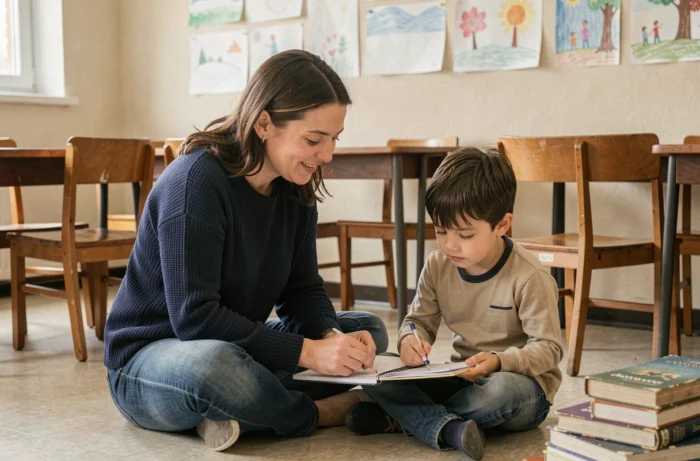
When a family cannot afford to pay for school meals, the child eats less well, concentrates less in class, and drops out more quickly. This observation has been documented by grassroots organizations for years.
Supporting disadvantaged children is not just a one-time gesture: it is a long-term effort that touches on nutrition, health, education, and housing. Several concrete levers exist to act on their future, provided one knows where to direct their commitment.
Emergency housing and homeless children: an underestimated barrier
We often talk about education or school supplies when discussing child poverty. However, the problem actually starts much earlier, with housing. The 2026 barometer published by UNICEF France and the Federation of Solidarity Actors reports a new increase in the number of children without housing solutions after calling 115, with a worsening compared to previous years.
A child without stable housing cannot follow a normal school curriculum. Frequent moves between temporary accommodations break the connection with school, peers, and teachers. In this regard, several associative structures coordinate actions that go beyond financial donations, such as surveying families or providing support for permanent relocation – this type of initiative can be found on https://enfantsdelespoir.fr/, for example.
Acting for disadvantaged children first means understanding that without residential stability, educational or nutritional programs have only a limited effect.
1-euro school meals and back-to-school allowance: what changes concretely
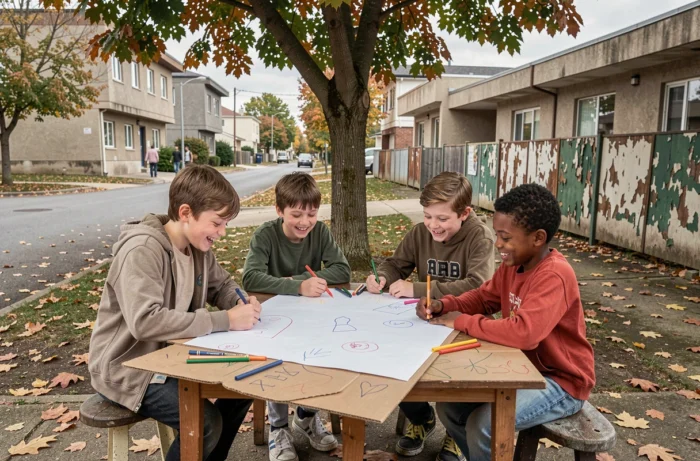
The national 1-euro school meal program has recently evolved. Since July 26, 2025, no new community can join the program. Existing communities will continue to receive state aid until December 31, 2027. Thus, we are moving from an expansion logic to a consolidation logic.
Concretely, this means that families in uncovered municipalities do not have access to this social rate. For these parents, the cost of school meals remains a heavy expense, and some children end up not having lunch at school.
The back-to-school allowance remains a safety net for millions of families. This aid helps cover part of the supplies, clothing, and educational materials.
Where the real daily need lies
Beyond national programs, local educational support makes a difference. Homework help, access to computer equipment, reading support for younger children: these actions, often carried out by volunteers or local associations, fill a gap that schools alone cannot address.
- Regular tutoring (at least once a week) helps children not to fall behind between school breaks, a time when inequalities widen the most.
- Providing appropriate materials (backpacks, notebooks, digital access) prevents the child from being visibly lacking in front of their peers, which generates exclusion and loss of confidence.
- Extracurricular activities (sports, culture, outings) offer a structured environment that the family situation does not always allow for financing.
Children’s villages and sibling placements: a recent regulatory advancement
The decree n° 2025-940 of September 8, 2025 has for the first time included children’s villages in the Social Action and Families Code. This type of care, which has existed in practice for decades, now benefits from a clear legal framework.
The principle is based on family-type care, often with siblings, supported by educators and a multidisciplinary team. For placed children, maintaining sibling bonds reduces emotional disruptions and promotes more stable development.
This recognition by decree also paves the way for better-targeted funding from departments, reflecting a desire to sustainably structure child protection.
What this changes for associations
Organizations managing children’s villages can now rely on regulatory text to negotiate with departmental councils. This is a concrete lever to increase available placements and professionalize supervision.
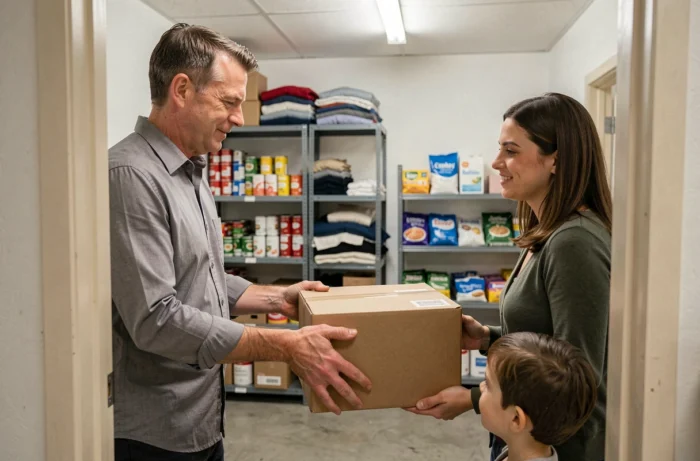
Children’s mental health: an angle still poorly covered by associative aid
For children in poverty, anxiety disorders and school dropout are closely linked. A child living in precarious housing, eating poorly, and experiencing family instability accumulates risk factors for their mental health.
- Associations that intervene in schools (emotion management workshops, discussion groups) directly reach the most exposed children.
- Skills sponsorship allows health professionals (psychologists, speech therapists) to volunteer in organizations that do not have the budget to hire them.
- Individual mentoring programs, where a referring adult follows a child over several years, show lasting results on confidence and academic perseverance.
Supporting disadvantaged children in terms of mental health requires going beyond just material support. A donation finances supplies, but a long-term commitment (mentoring, regular volunteering, educational support) acts on levers that money alone cannot activate. It is this combination of financial aid, human presence, and structured regulatory framework that produces real change in a child’s life.