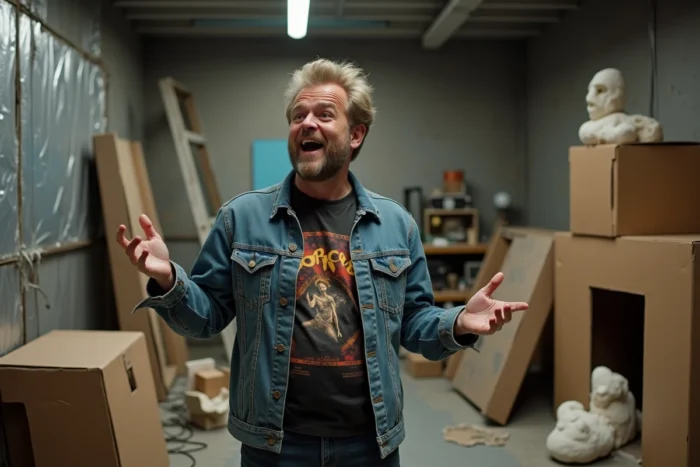
A rubber monster attacking a cardboard city, a makeshift spaceship made from an aluminum plate, dialogues so awkward they become poetic. Z-movies hold a unique place in the cinematic landscape, somewhere between magnificent failure and unintentional art. Understanding what makes them so endearing requires looking beyond the apparent ridiculousness.
Ghost budget and freewheeling shooting: the making of a Z-movie
Before discussing genre or culture, we must talk about money, or rather its absence. A Z-movie is primarily distinguished by its ridiculously low production values. Where a B-movie has a modest budget, a Z-movie pushes financial constraints to the extreme.
In practical terms, this results in shoots wrapped up in just a few days, sometimes a single weekend. The sets are often apartments borrowed from friends of the director. Actors juggle multiple roles: the one playing the hero also holds the boom mic between takes.
Have you ever noticed those strange continuity errors in some films, where the lighting changes abruptly from one shot to the next? This is a sign of a fragmented shoot, stretched over months due to the crew’s availability, with lighting that literally depends on the day’s weather. This constraint produces a recognizable, amateurish, and spontaneous aesthetic that is an integral part of the charm. Enthusiasts catalog and analyze these productions on serie-z.fr, proving that the genre inspires genuine documentation work.
Ed Wood and Plan 9 from Outer Space: why the worst movie became a cult classic
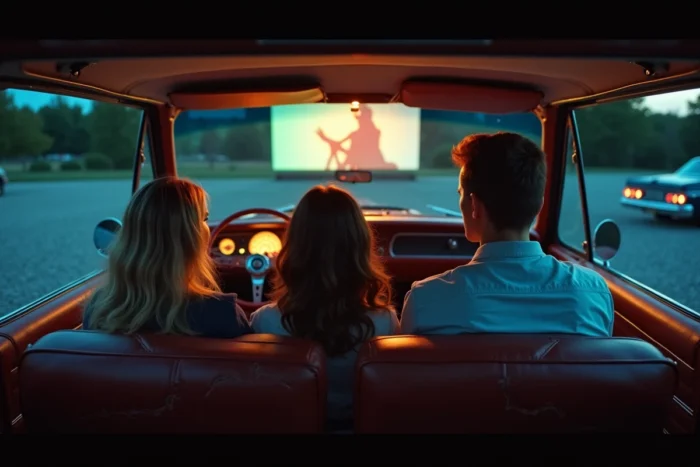
Talking about Z-movies without mentioning Ed Wood would be overlooking the founding figure of the genre. His film Plan 9 from Outer Space, released in 1959, long carried the label of worst movie ever made. The plot mixes aliens, zombies, and military personnel in a narrative whose logic defies rational analysis.
The sets oscillate between a papier-mâché cemetery and a cockpit reconstructed with a shower curtain. The lead actor, Bela Lugosi, passed away during filming. Ed Wood replaced him with his chiropractor, who hid his face behind a cape to mask the physical difference.
What makes Plan 9 fascinating is not its technical mediocrity. It is the total sincerity of its director in the face of failure. Ed Wood firmly believed in his films. This absence of irony transforms a disaster into an object of fascination. Tim Burton even dedicated a biographical film to Ed Wood in 1994, a sign that Hollywood acknowledges the place of these marginal creators in the history of cinema.
Low-cost horror and gore: the favorite playground of Z-movies
The horror genre overwhelmingly dominates Z-movie production, and this is no coincidence. Horror tolerates approximate special effects better than other genres. A low-budget science fiction film appears ridiculous if the spaceship doesn’t convince. A horror film, however, can transform makeshift efforts into a source of dread.
The Toxic Avenger, directed by Lloyd Kaufman and Michael Herz in 1984, perfectly illustrates this mechanism. The Troma studio, specializing in offbeat gore, has built an entire catalog of low-budget comedic horror films. Their recipe relies on three pillars:
- Gore effects made with recycled materials (latex, colored corn syrup, handmade prosthetics) that yield a deliberately excessive result
- Trashy and provocative humor that defuses any pretense of seriousness, attracting a complicit audience
- Quick shoots in natural settings, often industrial areas or forests, reducing costs to almost nothing
More recently, the Evil Dead saga made a comeback with Evil Dead Burn, directed by Frenchman Sébastien Vaniček. The film fully embraces the cheap and gory aesthetic that has defined the franchise, rather than seeking to make it more luxurious. This choice has been praised by genre enthusiasts, confirming that the niche audience remains true to the Z-movie spirit.
Z-movies and streaming platforms: fragmented but real access
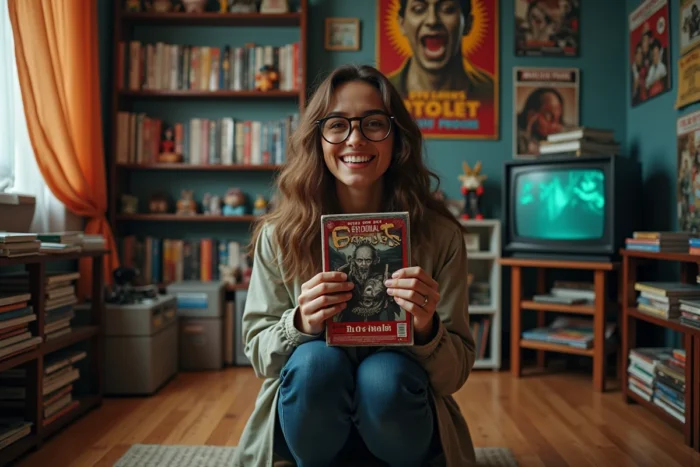
Long confined to video stores, flea markets, and midnight screenings, Z-movies are now circulating on streaming platforms. This digital migration changes the game for genre enthusiasts.
The catalog of cult and obscure films is now scattered across several services. A title may appear on Netflix for a month, disappear, and then reappear on a competing platform. This fragmentation complicates the task for viewers searching for a specific bad movie.
Meanwhile, a recent trend blurs the line between Z-movies and internet content. Since the early 2020s, low-budget cinema projects have emerged directly from YouTube channels specializing in analog horror (those videos that mimic the VHS aesthetic of the 1980s). Steven Spielberg himself has shown interest in adapting horror formats born on YouTube, a sign that the web circuit now feeds into traditional cinema.
Quentin Tarantino and the rehabilitation of genre cinema
The influence of Z-movies extends beyond their fan circle. Directors like Quentin Tarantino have built part of their filmography on the culture of exploitation cinema and low-budget films. From Jackie Brown to Kill Bill, references to grindhouse productions, low-budget martial arts films, and 1970s horror cinema permeate every frame.
Tarantino does not cite these films ironically. He treats them as a legitimate legacy of cinema, on par with Hollywood classics. This stance has helped bring Z-movies out of the ghetto of bad taste and integrate them into the broader cinephile conversation.
A Z-movie remains a laboratory where directors test ideas that no one would fund in a traditional circuit. Some of these ideas are absurd, while others become codes adopted by mainstream cinema decades later. The next time a blockbuster features a grotesque monster or an improbable narrative twist, the lineage with an obscure Z-movie shot in a garage is probably not far off.