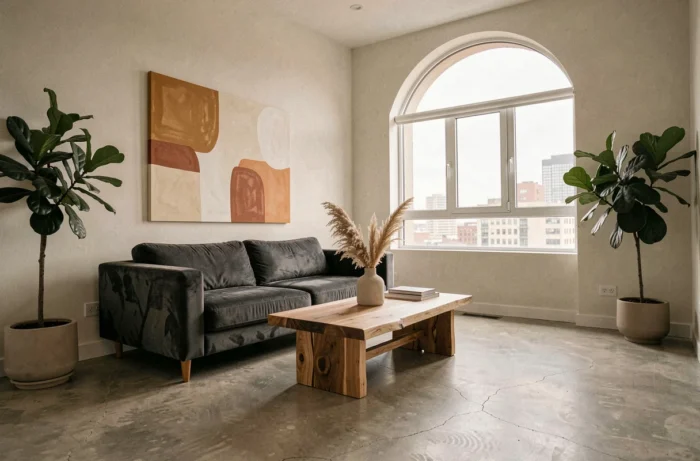
A corduroy sofa against a lime plaster wall, a dark walnut coffee table on a jute rug: modern decoration is no longer just a catalog of trends, but rather choices of materials and finishes that concretely transform the use of a room. Current orientations blend tactile comfort, indoor air quality, and clean lines, with a visual vocabulary that evolves rapidly.
Acoustic comfort and tactile materials: the forgotten angle of modern decor
We often talk about colors and furniture, but rarely about what we hear and touch. A living room with a polished concrete floor, smooth walls, and little textile quickly becomes a soundbox. The first operational reflex is to identify hard surfaces and add absorbing elements to them.
A thick washed linen curtain in front of a bay window, a long-pile rug under the coffee table, boucle wool cushions on the seat: these additions are not merely decorative whims. Acoustic comfort changes the entire perception of a space, especially in open rooms where the kitchen and living room communicate.
Tactile materials (velvet, boucle, textured ceramics) contribute to the same goal. We move from furniture that we look at to furniture that we touch. Feedback varies on this point, but in a very minimalist interior, a single structured fabric armchair is enough to break the perceived coldness.
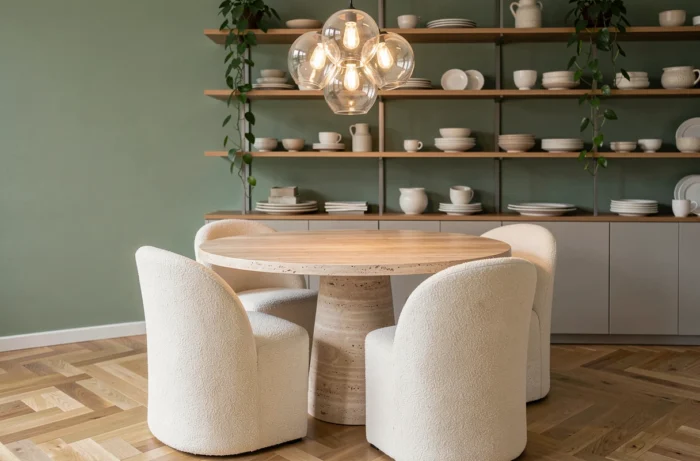
To explore ranges of furniture and objects that incorporate this texture logic, coherent selections can be found on espace-deco.be with pieces suitable for different interior styles.
Air quality and choice of finishes: a concrete regulatory constraint
Since January 1, 2023, the short-term reference value for indoor formaldehyde emissions is set at 100 µg/m³ in the French environmental code. This threshold directly concerns paints, glues, varnishes, wall coverings, and particle boards used in decoration.
In practice, this means that we no longer choose a wall coating or laminate flooring solely for its visual appeal. The A+ label (indoor air emissions) becomes a selection criterion on par with color or price.
Materials to prioritize for a healthy interior
- Clay or lime-based paints, naturally low in volatile organic compounds, which also offer the sought-after matte textures in modern decor
- Certified solid woods (oak, walnut, ash) rather than particle boards whose glues emit more formaldehyde
- Textiles made from untreated natural fibers (linen, organic cotton, wool) for curtains and covers, instead of coated synthetic fabrics
The European regulation ESPR (EU 2024/1781) goes even further by integrating sustainability, reparability, and recycled content into eco-design requirements. A first work plan for 2025-2030 was adopted by the European Commission in April 2025. Decorative furniture is gradually entering this regulatory framework, guiding manufacturers towards more traceable products.
Living room and lounge color palette: shades that work in 2026
Competitors talk a lot about burgundy and Mocha Mousse. In practice, these deep colors pose a concrete problem: they darken poorly exposed rooms. Before choosing a shade, one should measure the natural brightness of the room at different times.
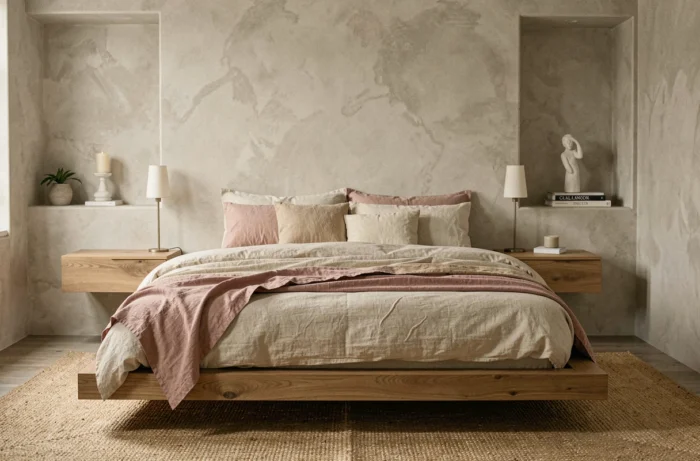
In a north-facing living room with little direct light, a dark-colored wall (burgundy, forest green, midnight blue) only works if it is balanced by light surfaces opposite and well-positioned indirect lighting. Without this balance, the room appears smaller and more closed off than before the intervention.
Tested color combinations in modern decoration
The duo of sage green and light wood such as bleached oak remains a safe bet for open living spaces. It creates a calming atmosphere without falling into monotonous neutrality. For rooms that receive a lot of light, warm shades (muted terracotta, soft ochre) add depth without overwhelming the volume.
A practical point often overlooked: test the color in a flat area of at least one square meter before painting the entire wall. Samples of a few centimeters can mislead about the final result, especially with matte finishes that absorb light differently depending on the time of day.
Dark wood furniture and design objects: balance without weighing down
Walnut and dark-stained woods are making a strong comeback in contemporary furniture. The risk when accumulating a table, sideboard, and shelves in the same dark wood is creating a massive effect that contradicts the principles of lightness in modern decor.
The practical rule: one to two dark wood pieces per room, no more. The rest of the furniture should remain in light tones or contrasting materials (brushed metal, glass, light stone). This alternation creates a visual hierarchy that guides the eye without saturating the space.
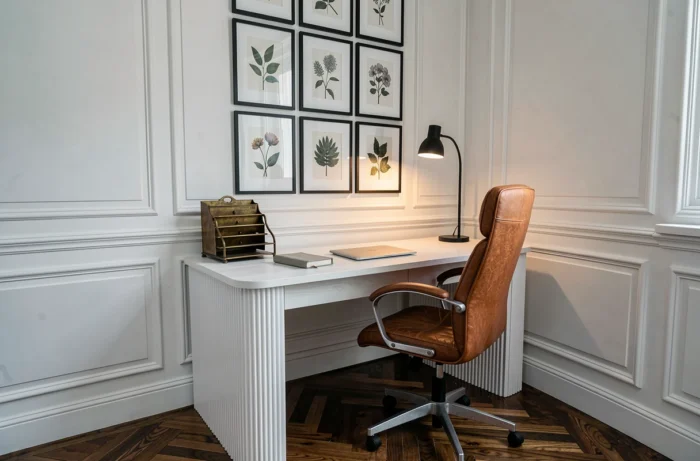
Decorative objects follow the same dosage logic. A sculpted ceramic piece or an amber glass vase adds character to a shelf. Three objects of the same type on the same surface produce the opposite effect: the eye no longer knows where to settle.
Integrating design into a lived-in interior
A standalone design piece in a too-plain room resembles a museum piece. To integrate it, surround it with lively textures: a throw draped over the armrest, a stack of books on the neighboring seat, a potted plant nearby. Modern furniture gains presence when it coexists with everyday elements.
Interior decoration is evolving towards more technical than aesthetic choices. Between regulatory constraints on emissions, the return of natural materials, and the rise in sensory comfort, every decision (paint color, wood type, textile type) involves more than just a simple visual preference.