
The construction sector in France is hiring, but the conditions for welcoming apprentices are evolving faster than the orientation content suggests. Since July 1, 2025, employers must directly contribute to the financing of certain apprenticeship contracts, in addition to the coverage provided by the OPCO. This change in the financial framework, combined with a revision of the funding levels applicable to new contracts, is reshaping the alternating training programs in construction for the 2026 school year.
Funding for construction apprenticeships: what changes since 2025
The CAPEB has reported a direct change: employers must now co-finance certain apprenticeship contracts in the construction industry. Before this measure, the OPCO covered almost all educational expenses. This remaining cost alters the economic calculation for artisans and SMEs in the construction sector.
The decree of August 29, 2026, replaces previous texts on funding levels (NPEC) and applies without retroactivity to new contracts. The CFA must adapt their budgetary frameworks accordingly, and training companies do not all have the same capacity to absorb this additional cost.
The 2026 funding rates for construction apprenticeships have been revised. Depending on the chosen field (masonry, electricity, plumbing, roofing), the amount funded by the OPCO varies. For a young person who is hesitating between several trades, the level of funding can indirectly affect the availability of places.
Some companies restrict their recruitment of apprentices when the remaining costs increase. Regional structures like batiment-cfa-35.fr publish their accessible alternating programs, which allows for a concrete check of the pathways available in a given territory.
Working hours for construction apprentices: a little-known derogatory regime
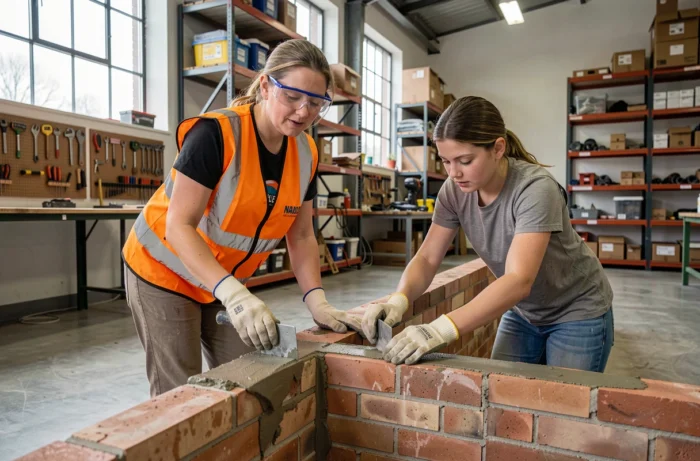
The construction sector benefits from a specific framework for the working hours of apprentices. The duration can reach 40 hours per week when the collective organization of the site justifies it, including for adult apprentices.
This exemption is explained by the reality of construction sites: work rhythms do not follow office hours. An apprentice in roofing or masonry adapts to weather constraints, delivery deadlines, and pouring phases that cannot be interrupted.
For minor apprentices, additional protections frame this flexibility. Field feedback varies on this point: some masters of apprenticeship believe that this flexibility allows for more realistic training, while others feel it increases the burden for profiles still in the learning phase. The question of working hours remains a factor to consider before signing a contract, especially in physically demanding trades like carpentry or heavy construction.
Master of apprenticeship in construction: strengthened obligations
The qualification and experience requirements for the master of apprenticeship have been specified in recent years. The company hosting an apprentice must demonstrate that the designated tutor has proven competence in the field targeted by the diploma being prepared (CAP, professional baccalaureate, BTS).
This strengthening has a direct consequence: not all construction companies can train. A small structure where the manager combines roles may find themselves unable to take on an apprentice if no one meets the criteria of the master of apprenticeship.
- The master of apprenticeship must justify a minimum professional experience in the trade corresponding to the diploma prepared by the apprentice
- The company must be able to demonstrate that the material conditions (tools, safety, supervision) are met on the site or in the workshop
- The pedagogical follow-up involves regular coordination with the CFA, particularly for evaluations in work situations
For trades in energy renovation, where technical skills are evolving rapidly (external insulation, heat pumps, double-flow ventilation), finding a qualified master of apprenticeship is becoming a bottleneck in certain regions.
Job market in construction and apprenticeships: pressure on job offers
JobTeaser observes a decrease in job offers in construction and civil engineering, with apprenticeship recruitment in construction declining sharply over the past year. This data contrasts with the recurring discourse on labor shortages in the construction sector.
Two interpretations coexist. The first: companies are slowing down the hiring of apprentices because costs are rising (employer contribution, revision of NPEC). The second: the overall volume of construction projects fluctuates, and order books in new construction are contracting in several regions of France.
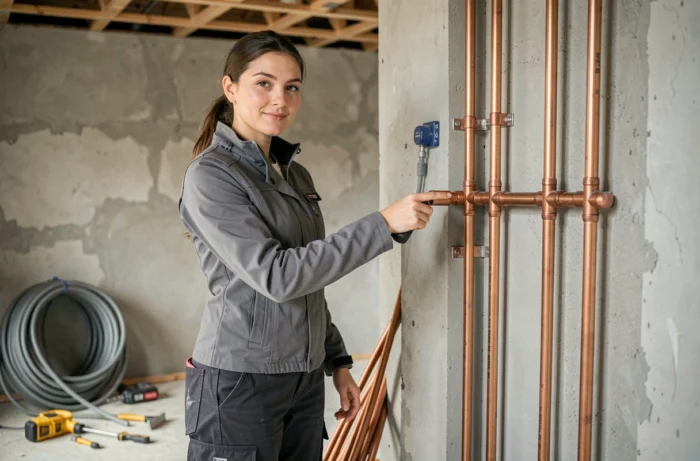
Training related to energy renovation remains better oriented. Regulatory obligations (energy performance of buildings, renovation of the existing stock) maintain a structural need for skills in insulation, heating, and air tightness. An apprentice who chooses a specialization related to the energy transition of buildings positions themselves in a segment where the demand for skills does not weaken at the same pace as the rest of the sector.
- The masonry and heavy construction sectors are more affected by the slowdown in new projects
- The trades of electricity and plumbing, driven by renovation, maintain a more stable volume of offers
- BTS and professional titles at level 5 (equivalent to bac+2) lead to site management functions, where profiles are lacking
Apprenticeships in construction remain a training mode with a high rate of professional integration, but the choice of specialty and territory weighs more than before on actual job prospects. Checking the available local offers, the level of funding for the targeted training, and the capacity of the hosting company to fulfill its tutoring obligations is a prerequisite that orientation brochures do not always detail.