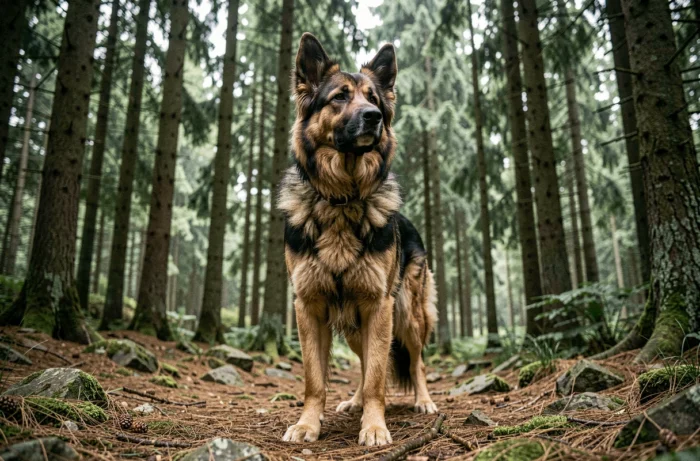
The Timber Shepherd is one of those dog lineages that circulate on social media with spectacular photos, but whose zootechnical status remains unclear. Neither an official breed nor a simple random cross, this lupoïde-type dog occupies a gray area between voluntary selection and the absence of an institutional framework. Understanding its origins involves tracing several genetic and regulatory threads that typical descriptive sheets do not address.
Timber Shepherd and FCI Status: Why This Lineage Has No Standard
The Fédération Cynologique Internationale does not recognize the Timber Shepherd. This is not an oversight or an administrative delay. No breed club has submitted a recognition request, and for good reason: the lineage does not meet the usual criteria that allow for a file to be established, notably an open pedigree book, a sufficient breeding population, and documented morphological homogeneity over several generations.
The Timber Shepherd is described as resulting from crosses involving the German Shepherd and wolf-descended dogs. Breeders working with these lineages claim a selection aimed at a lupoïde physique (facial mask, elongated silhouette, upright ears) and a temperament more primitive than that of a classic shepherd. However, field reports diverge on the behavioral stability from one generation to the next, complicating any attempt at standardization.
This lack of recognition has concrete consequences. A puppy sold as a Timber Shepherd does not have any LOF pedigree. The buyer therefore has no official guarantee regarding the ancestors or compliance with a defined type. By tracing the origins of the Timber Shepherd dog, one can gauge how the term encompasses very variable genetic realities depending on the breeding and the countries.
Founding Crosses of the Timber Shepherd: German Shepherd, Utonagan, and Nordic Lineages
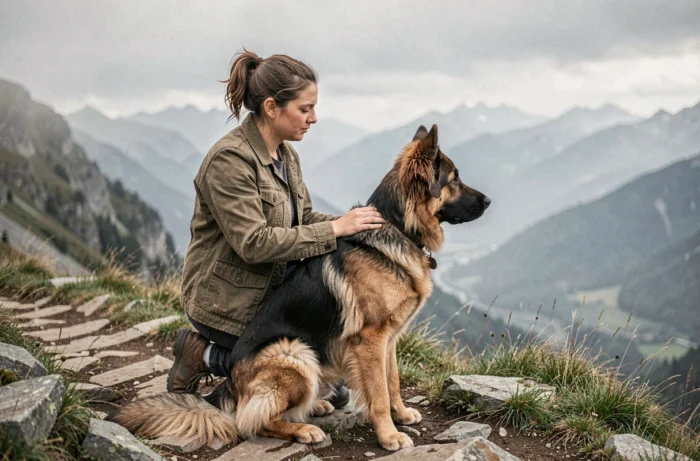
The first mentions of the Timber Shepherd date back to North American selection programs that sought to produce a dog with a lupine appearance without resorting to a first-generation wolf-dog hybrid. The genetic foundation mainly relies on the German Shepherd, to which Nordic-type lineages (Malamute, Husky) have been added, and according to some breeders, contributions from European lupoïde breeds such as the Utonagan or the Northern Inuit Dog.
This composite genealogy explains the observable morphological diversity. Two Timber Shepherds from different breeders can exhibit very different sizes, coats, and bone structures. The absence of a centralized pedigree book prevents tracing the lineages with the rigor applied to recognized breeds.
The comparison with other wolf-dogs is instructive. The Czechoslovakian Wolfdog and Saarloos, on the other hand, have an FCI standard. Their creation followed a documented protocol over decades, with initial wolf-German Shepherd crosses supervised and then a closed selection. The Timber Shepherd has not taken this path, which does not mean that the selection is anarchic, but that each breeder operates according to their own criteria.
French Regulatory Framework for Lupoïde Dogs Without Pedigree
One aspect rarely addressed in the sheets dedicated to the Timber Shepherd concerns the applicable regulations in France for dogs without pedigree whose morphology can be likened to that of a categorized breed.
Category 1 and 2 dogs are subject to strict obligations: ownership permit, identification, rabies vaccination, civil liability insurance, holder’s aptitude certificate, and behavioral assessment. Importation is prohibited for category 1.
The regulation specifies that when a dog without pedigree exhibits a morphology related to a category 1 breed, it is the owner’s responsibility to provide a veterinary certificate establishing that it does not fall into these categories. For a Timber Shepherd of imposing size, this process is not trivial:
- A veterinarian must examine the dog and issue a certificate of non-membership in a regulated category, which requires knowledge of the dog’s exact phenotype.
- In the event of a check or incident, the absence of an LOF pedigree places the owner in a position where they must prove their dog’s type, not the other way around.
- Civil liability insurance may refuse to cover a dog whose racial status remains undetermined or apply surcharges.
A non-categorized Timber Shepherd remains subject to general obligations (identification, vaccination), but the ambiguity surrounding its classification makes every administrative step more complex than with a recognized breed.
Timber Shepherd in Breeding: What Current Selection Reveals
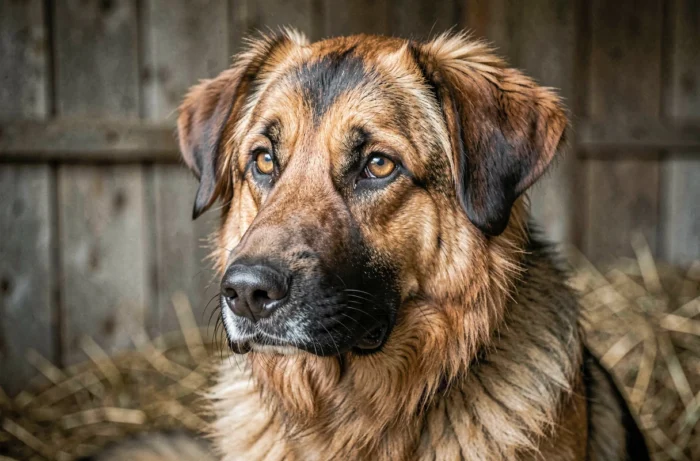
Some breeders in France and Europe offer Timber Shepherds and derived lineages such as the Nordic Timber. These structures operate in a closed or semi-closed circuit, with breeders often imported from North American lineages.
The coefficient of inbreeding is a point of vigilance. In a small population not linked to a pedigree book, the risk of genetic drift increases with each generation. Some breeders publish their inbreeding coefficients and conduct health tests (dysplasia, degenerative myelopathy), but this transparency remains voluntary and not controlled by a third-party organization.
The temperament raises specific questions. Lineages with a strong lupoïde component retain so-called primitive behavioral traits: distrust of strangers, low tolerance for constraint, need for space and sustained mental stimulation. These characteristics are not defects, but they effectively exclude a number of living contexts (apartment, family with young children, novice owner).
Differences with Classic Line German Shepherd
A Timber Shepherd does not behave like a working German Shepherd. Reactivity, obedience under stress, and spontaneous sociability with other dogs differ significantly. The available data do not allow for a conclusion on a uniform behavioral profile, precisely because the genetic variability between lineages is too significant.
- The LOF German Shepherd benefits from decades of selection on character, with evaluation grids (Schutzhund, behavior tests).
- The Timber Shepherd is primarily selected for its lupoïde phenotype, with temperament being a secondary criterion depending on the breeders.
- Owner feedback ranges from dogs very close to humans to distant individuals, reflecting the heterogeneity of the selection.
The Timber Shepherd remains a dog whose history is still being written. Without official recognition, without a fixed standard, and with a regulatory framework that can complicate the daily life of its owner, it attracts as much for its aesthetics as for the gray areas surrounding its genetics. Acquiring such a dog implies accepting this uncertainty and committing to a breeder whose practices are verifiable.