Leaving your pet overnight at a veterinary clinic raises legitimate questions. What actually happens once the door is closed? Between monitoring, administered care, and human presence, practices vary depending on the type of facility. Understanding how a night at the veterinarian unfolds allows for a better assessment of what the hospitalized animal is truly receiving.
Nocturnal Monitoring: What Distinguishes a Clinic from a Veterinary Hospital
Not all facilities operate the same way at night. The level of monitoring directly depends on internal organization and available staff.
| Type of Facility | Human Presence at Night | Monitoring | Veterinarian Availability |
|---|---|---|---|
| Traditional Veterinary Office | Rarely on-site | Cameras, occasional checks | Phone availability, on-site if needed |
| Veterinary Clinic with Hospitalization | Variable (Veterinary Assistant or on-call veterinarian) | Regular rounds, partial monitoring | On-site or reachable within minutes |
| Veterinary Hospital (CHV) | Team present at all times | Continuous monitoring, intensive care possible | Veterinarian on-site 24/7 |
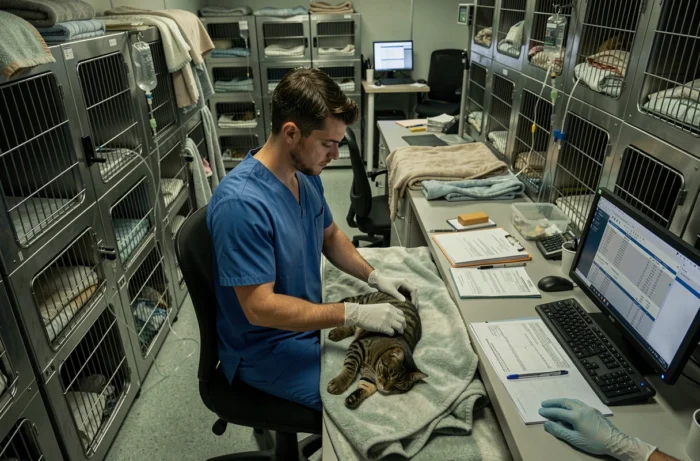
The most significant difference lies in the permanent or non-permanent physical presence of a caregiver. In a city office, the animal may be left alone for several hours, monitored by camera. In a CHV, a full team conducts rounds and can intervene at any moment.
This distinction is not always explained to owners at the time of hospitalization. A detailed guide on a night at the veterinarian helps better anticipate the reception conditions. Asking the question directly (“Will someone be on-site tonight?”) is also a good reflex.
Care and Treatments Administered During the Veterinary Night
The night is not just about caging the animal. For a hospitalized animal, the care protocol continues according to the treating veterinarian’s prescriptions.
Administration of Medications and Infusions
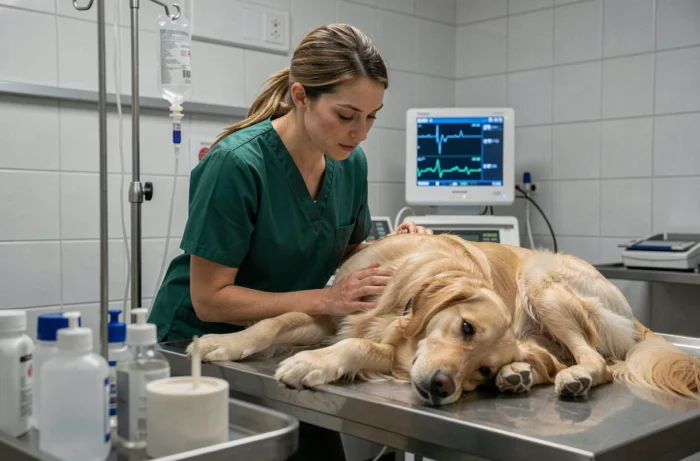
Daytime treatments continue at night. This includes intravenous infusions for dehydrated animals, pain relief at regular intervals, and antibiotics. The infusion remains the most common nighttime care, especially after surgery or in cases of kidney failure.
The infusion rate and medications are adjusted based on the animal’s progress. A specialized veterinary assistant (ASV) or an on-call veterinarian checks these parameters during each visit.
Monitoring Vital Signs
Depending on the severity of the case, staff monitor temperature, heart rate, and respiratory rate. For critical cases in intensive care, electronic monitoring may continuously track these data.
- Body temperature checked every few hours to detect post-operative hypothermia or infectious fever
- Respiratory rate monitored primarily in animals under sedation or with heart problems
- Condition of the surgical wound visually checked at each round to spot any bleeding or abnormal swelling
The 3115 Number and Continuity of Care: What Regulations Provide
The Rural and Maritime Fishing Code imposes a continuity of care obligation on veterinarians for the animals entrusted to them, including outside of opening hours. An office cannot simply rely on a silent answering machine at night.
In practice, each facility must offer an organized response: care agreement with a colleague, referral to an emergency clinic, or transfer to a hospital. The 3115, a national number accessible 24/7, allows owners to be geolocated and redirected to the appropriate facility in their area.
This system changes the game for situations that deteriorate in the middle of the night. If the condition of an animal hospitalized in an office without permanent presence worsens, the protocol provides for a rapid transfer to a facility equipped to intervene.
Animal Comfort and Management of Nighttime Stress in the Clinic
The nighttime environment of a clinic is unfamiliar to a cat or dog. Monitoring noises, medical odors, proximity to other animals: the sources of stress are numerous.
Facilities adapt their practices to limit this anxiety. Cats are systematically separated from dogs in distinct rooms or visually isolated areas. Blankets or towels carrying the owner’s scent can be placed in the cage when provided by the family.
Some clinics reduce lighting at night and limit handling to only scheduled care. The goal is to respect a cycle of rest, even if relative, as a stressed animal recovers less well after surgery.
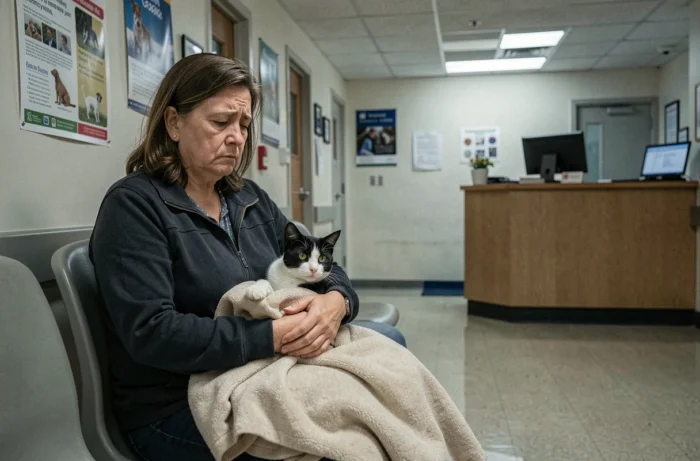
Pain management also plays a direct role in stress levels. An adapted pain relief protocol, with medications administered at fixed times, contributes to both comfort and healing. An animal in pain becomes agitated, pulls on its infusion, and delays its own recovery.
The cost of a night of hospitalization partly reflects this organization. The rates charged by French veterinary clinics vary significantly depending on the facility, species, and necessary care. However, a hospital with permanent presence logically charges more than an office providing simple camera monitoring. Requesting a detailed estimate before hospitalization remains the only way to anticipate the bill.